


Ultimate Guide for Climbing Mount Kenya
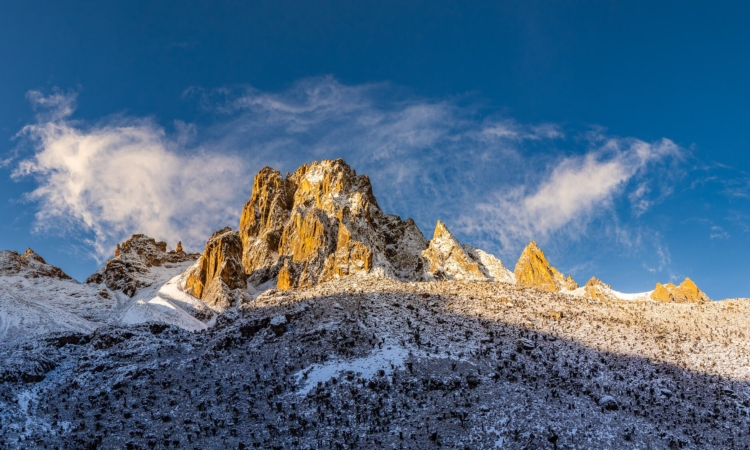
History of Mount Kenya: Mount Kenya’s name came from the inability of the colonialist to pronounce “Kirinyaga/Kerenyaga” a name that was given to the mountain by the Kikuyu people which means “Mountain of Whiteness” attributed to the snow on its top peaks.
Discovery, refreshment, and adventure are what national parks are made for, besides their primary role of protecting endangered creatures and available natural resources.
This is the reason we introduce to you a destination less explored, yet offering a variety of flora and fauna, breathtaking landscapes, cool climates, and unique attractions.
Words can’t fully express the experience, because in every direction, there is a special sight and sound for every visitor. Mount Kenya National Park is not only a treasure for mountaineers or geographers but also for nature lovers.
The park’s main attraction is the magnificent Mount Kenya, Africa’s second-highest mountain, with over six summits.
Mount Kenya is an extinct volcano and straddles the equator approximately 193 km northeast of Nairobi city, about 480 km from the coast of Kenya, and stands at 5,199m above sea level.
The park sprawls across 2,800 sq. km of land in the eastern part of the Great Rift Valley, with portions fenced off by electrified fences to prevent elephants from invading the farmlands of surrounding communities.
To a novice traveler, Kenya is the second-largest country in East Africa, gifted by nature and home to a wide range of unique wildlife species, plants, and exotic beaches.
Even beyond the famous Masai Mara National Park and other national parks, Mount Kenya National Park offers an excellent experience with a variety of mammals, birds, reptiles, and breathtaking landscapes.
Kenya’s neighbors include Uganda to the west, Tanzania to the south, Ethiopia to the north, South Sudan to the northwest, the Indian Ocean to the southeast, Somalia to the east, and Rwanda, among others.
The country is crossed by the equator and lies in the Great Rift Valley.
Mount Kenya National Park was designated and declared a national park in 1949 to conserve and protect the endangered unique wildlife species, plants, birds, and the giant Mount Kenya from any form of human destruction. Not forgetting the importance of the park as a water catchment area for Kenyan use.
Water from Mount Kenya is used by over 50% of the Kenyan population, either in the form of hydroelectricity or directly as water.
It is also vital for local inhabitants, who use it for drinking and other purposes.
However, before becoming a national park, it was a forest reserve. In 1978, the area was declared a UNESCO Biosphere Reserve, paving the way for its recognition as a UNESCO World Heritage Site in 1997, when the park was merged with the surrounding forest reserve.
Reports suggest the park was established to promote tourism, preserve nature and its beauty, protect the local catchment, and conserve biodiversity.
The park’s area is about 3,000 meters above sea level, with an estimated 705 sq. km of forest reserve.
One may enjoy a honeymoon, photographic experience, family retreat, birding, camping, and more for an unlimited period, with the guidance of experienced park rangers and other officials, such as driver-guides.
There are several gates through which you can access Mount Kenya National Park: Kamweti Gate, Mawingu Gate, Narumoru Gate, Chogoria Gate, Kihari Gate, and Sirimon Gate.
You can enter the park for a small entrance fee, engage in various activities, and exit when your visit ends. The park is administered by the Kenya Wildlife Service.
Park Entrance Fees
Mount Kenya National Park entrance fees are charged to visiting tourists, organizations, safari guides, aircraft, and vehicles. Prices vary depending on the status of the visitor:
For instance, foreign non-residents, foreign residents, East African citizens, and Kenyan nationals all pay different rates.
The fees cover a 24-hour period, except for those who subscribe for monthly or annual stays. Below are the charges as stated in the Kenya Wildlife Service 2020-2021 conservation fees:
| Category | Details | Price |
|---|---|---|
| Daily (East African Citizens) | Children and Students | 215 Ksh |
| Adults | 300 Ksh | |
| Daily (Foreign Residents) | Children | 515 Ksh |
| Adults | 1,030 Ksh | |
| Daily (Non-residents) | Children/Students | 26 USD |
| Adults | 43 USD | |
| Annual Park Fees | Adults | 43,100 Ksh |
| Children | 10,340 Ksh | |
| Corporate | 103,440 Ksh | |
| Safari Driver Guides | 6,000 Ksh | |
| Tourist Vehicles | 6-12 Seaters | 1,030 Ksh |
| Less than 6 Seats | 300 Ksh | |
| 45 Seats and Above | 5,000 Ksh | |
| Aircraft | 7-14 Seats | 1,000 Ksh |
| 21 Seats and Above | 3,015 Ksh | |
| Helicopter Landing Fees | 260 USD |
Payments can be made through Mpesa, Visa Card, Electronic Funds Transfer, or direct deposits to KWS bank accounts. However, for those using tour operators, the charges are usually included in the trip package. These charges exclude the prices for activities.
All park fees contribute to conservation efforts, ranger salaries, and support for local communities that are often affected by animals, birds, and other park residents invading their farms and destroying crops.
What to See and Do in and around Mount Kenya National Park
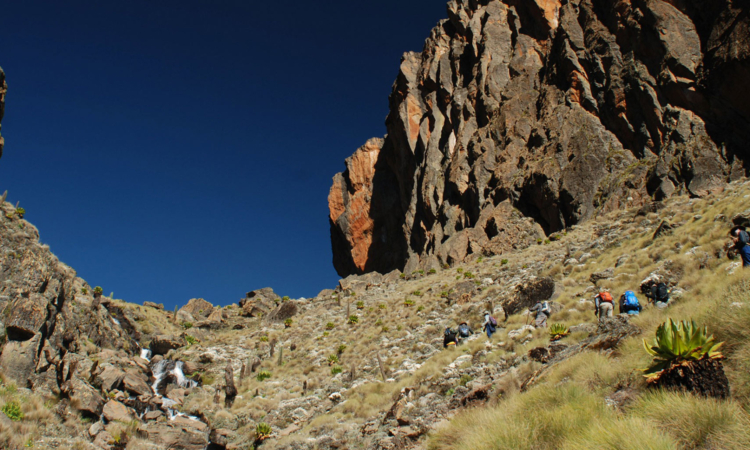
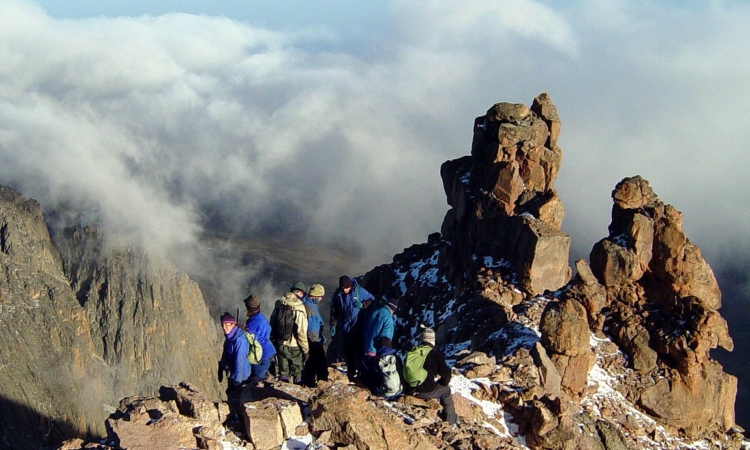
- Mount Kenya: This is an ancient extinct volcano standing at 5,199 meters above sea level, making it the second tallest mountain in Africa. Its summits include Batian Peak at 17,057 ft, Nelion Peak at 17,021 ft, Pt Lenana Peak at 16,355 ft, Coryndon Peak at 16,273 ft, and several others. The routes to the summit are Burguret Route, Sirimon Route, Summit Circuit, Naro Moru Route, Chogoria Route, and the Timau Route. The peaks are covered by glaciers, offering breathtaking views and unforgettable experiences for hikers. Depending on one’s hiking speed and physical fitness, reaching the summit can take about 3-4 days, with nights spent at different campsites. The mountain is also a vital water catchment area, providing streams for wildlife and local communities. Those intending to hike should have sturdy hiking boots, a professional camera, and other essentials.
- Mammals: Several mammals call Mount Kenya National Park home and can be spotted during game drives, nature walks, or while camping at night. Some inhabitants include lions, spotted hyenas, jackals, warthogs, bush pigs, mongooses, black rhinos, elands, black-fronted duikers, impalas, wild dogs, bushbucks, and many others. However, spotting big cats may require some luck.
- Birds: Mount Kenya National Park is home to various unique bird species, both endemic and non-endemic. Among the many bird species present are the African crowned eagle, olive ibis, Cape eagle-owl, grey tit-flycatcher, and others. Birdwatching can last for unlimited hours, guided by expert park rangers.
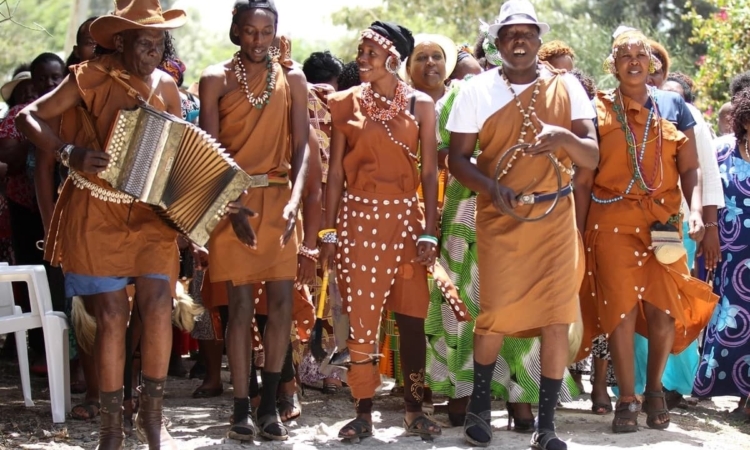
- Culture: The park is surrounded by several cultural communities, including the Maasai, Ameru, Embu, and Kikuyu people. These communities entertain guests with songs, community walks, and more at very affordable rates.
- Caves: There are caves with historical significance around the mountain, such as the Mau-Mau Caves, which were used as a hideout during the Mau-Mau Rebellion, and Shipton’s Caves, located along the Sirimon Route.
Interesting Facts About Mount Kenya
Interesting facts about Mount Kenya include:
- Mt. Kenya is an extinct volcano that last erupted over 2 million years ago.
- Mt. Kenya is the highest mountain in Kenya and the second highest in Africa at an elevation of 5,199 meters above sea level at the Batian Peak.
- It has 3 main peaks; Batian peak, which is the highest at 5,199m, Nelion peak comes in second at 5,188 meters and Point Lenana is the third highest at 4,985 meters of elevation.
- The Batian peak was first summited by Sir Halford John Mackinder. Cesar Ollier and Josef Brocherel in September, 1899 on their 4th attempt to summit the mountain in the same year.
- There are 8 routes on Mt. Kenya that can be used to summit the mountain to mostly Point Lenana, the trekkers / hikers peak. Chogoria, Sirimon and Naro Moru are the most popular routes on the mountain.
- Best time to hike Mt. Kenya is during the dry months of the year. July to September and January to February.
- Mt. Kenya is the source of Kenya’s longest river, River Tana.
- Mt. Kenya is a designated UNESCO World Heritage Site coined in 1997.
The presence of native animals, lakes, mineral springs and glaciers (though shrinking) on Mt. Kenya make it unique. - It supports a rich diversity of flora and fauna providing wonderful and rewarding wildlife and mountaineering experiences.
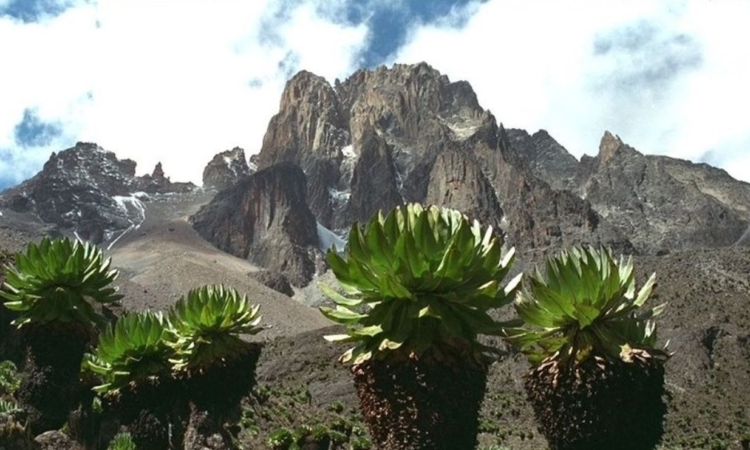
- Features different vegetation zones. Grasslands, dense forests, bamboo forests, heather and moorland, alpine zone and the nival zone at the summit.
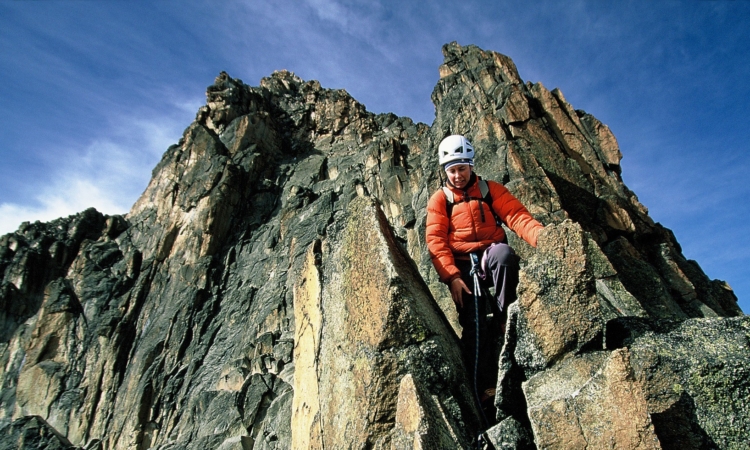
- Provides excellent rock-climbing adventures on the Batian and Nelion peaks.
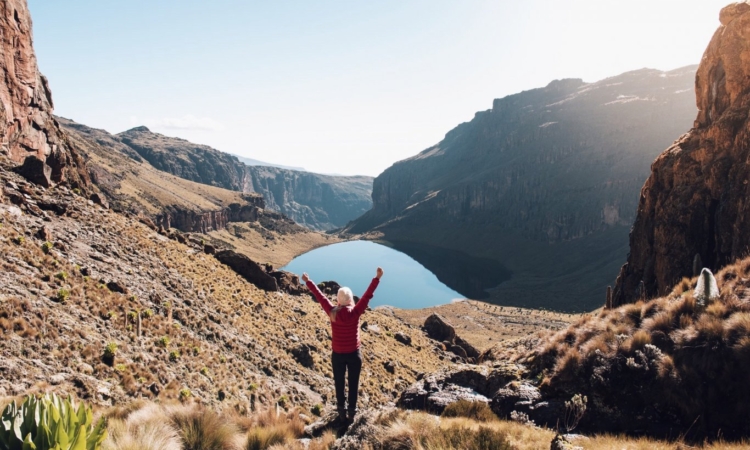
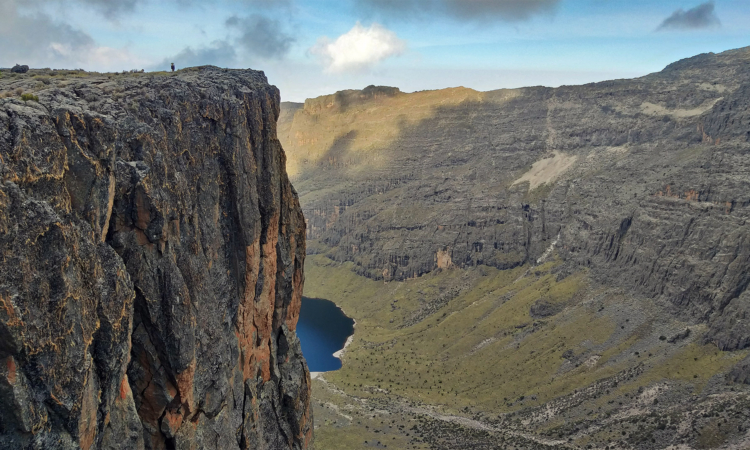
- The mountain has beautiful glacial lakes (tarns) and caves for exploration adding to its scenic beauty.
- Different tribes in Kenya call Mt. Kenya home, that is the Maasai, Kikuyu, Ameru and Embu people of Mount Kenya.
- In conclusion, Mt. Kenya is an all-round tourist destination providing mountain climbing experiences, cultural and wilderness experiences.
Animals/Wildlife & Birds
The varied habitats in Mount Kenya National Park which include the different vegetation zones on the mountain, the water catchments and the dense lush forest that surrounds the national park provide homes to hundreds of different animal and bird species.
The Animals in Mount Kenya National Park
African Elephants, Cape Buffalos, Giant Forest hogs, water bucks, leopards, lions (rarely sighted), bongo antelopes. Suni antelope, zebras (including albino zebras), bush bucks, genet cat, black fronted duikers, rock and tree hyrax. Spotted hyenas, skyes’ monkeys, colobus monkey species including the black and white colobus monkey, cape clawless otter. Chameleons, elands, white tailed mongoose, mole rats among many others.
Endangered species in Mount Kenya: Black rhinos, skinks, sunni buck and Mt. Kenya mole shrew.
The Birds of Mount Kenya National Park
The national park is home to over 130 different bird species including some mountain endemic species.
Some of the notable birds include: Abyssinian ground thrush, crowned crane, verreaux’s eagle, African crowned eagle, cape eagle owl, long tailed widow bird. Purple-throated cuckoo-shrike, Kenrick’s starling, Abyssinian owl, sharpe’s longclaw, scarlet-tufted sunbird. Olive Ibis, lammergeier, Ayres’s hawk eagle, Jackson’s widow bird, Abbott’s starling, lesser kestrel, African grass owl among other species.
Getting to the Park
You can reach the park either by chartered flight from Jomo Kenyatta International Airport in Nairobi to Nanyuki Airstrip or by road, via Nanyuki or Naro Moru Road—a scenic 6-8 hour drive.
Accommodation in and around the Park
There are accommodations ranging from budget to luxury in and around the park, offering excellent services and cuisines.
Options include Serena Mountain Lodge and hotels along Nanyuki Road.
Most of the shelter here are camps along the mountain trails.
Best Time to Visit Mount Kenya National Park
Since the main tourist activities in the park are mountain hiking and game viewing, it’s advisable to visit during the dry season. The months with little or no rain are from December to February and late May to mid-October. However, the park can be visited year-round, though rain interruptions may occur.
Mount Kenya National Park is a rewarding destination, offering remarkable safari experiences, fun, breathtaking scenery, and much more. Most importantly, it is affordable, with activities suitable for everyone.